
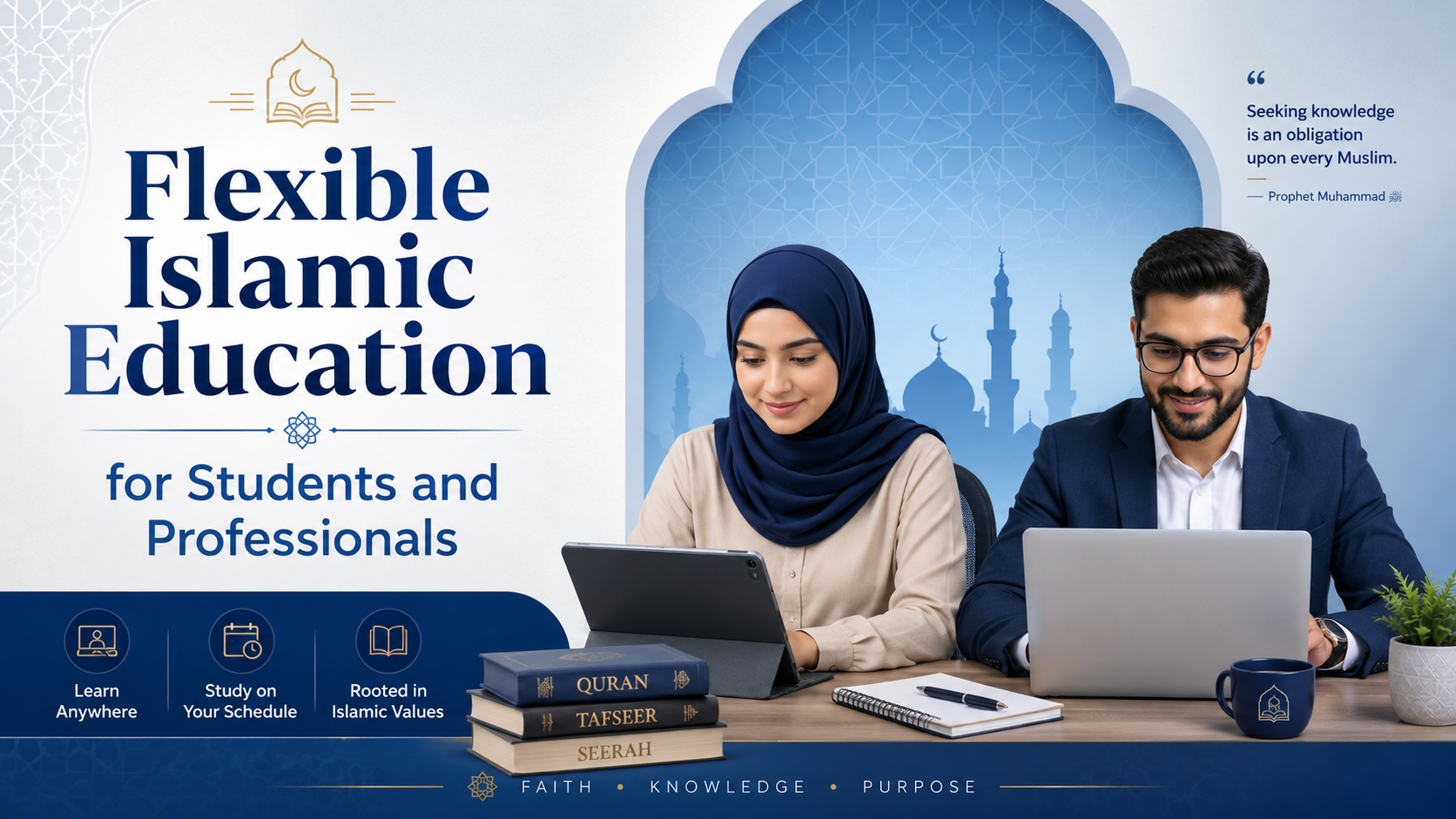
Many Muslims want to study Islam seriously but cannot enter a full-time traditional program. University students have classes and exams. Professionals have jobs. Parents have family responsibilities. Others may live far from a qualified teacher or institution.
For these learners, the main barrier is often not lack of interest. It is time, location and the difficulty of fitting study around adult responsibilities. Flexible education can help close this gap, provided flexibility does not become an excuse for weak teaching or shallow content.
Adult Learners Face Different Barriers
Research on adult participation in higher education shows that work-study conflict, time pressure, financial responsibilities and family commitments are persistent barriers. A 2026 systematic review found that flexible provision such as online, blended and part-time formats has become an increasingly important institutional factor supporting adult learners.
This finding is highly relevant to Islamic education. A professional may be willing to study Tafsir or Arabic for years but still be unable to attend daily daytime classes. A university student may want structured Islamic learning but have only evenings or weekends available.
Flexibility Can Take More Than One Form
Flexible learning does not simply mean putting recorded lectures online. Institutions can offer several kinds of flexibility: weekend classes, evening schedules, modular courses, hybrid delivery, online live sessions, recorded support material and the option to study selected subjects rather than a complete diploma.
Different learners need different combinations. Someone who lives nearby may prefer onsite weekend study. A learner in another city may need live online classes. A working parent may benefit from a hybrid model that combines scheduled interaction with material that can be reviewed later.
Blended Learning Can Preserve Human Interaction
One concern about online education is the loss of teacher-student interaction. That concern is valid, especially in Islamic learning where correction, mentorship and adab matter. Flexible education works best when technology supports human teaching rather than replacing it.
Research on blended higher education has found that reducing classroom time and replacing part of it with well-designed online learning can produce learning outcomes comparable to conventional classroom models. UNESCO has also noted that hybrid education can promote flexibility for working adult learners while preserving the value of interpersonal exchange.
Islamic Learning Needs More Than Content Access
A person can already find thousands of Islamic lectures online for free. Yet access to videos is not the same as being part of a structured educational program. Serious learning needs sequence, qualified teachers, opportunities to ask questions, feedback and a clear understanding of what comes next.
This is especially important in subjects such as Arabic, Tajweed and Fiqh. Students may not recognize their own mistakes. A teacher can correct pronunciation, clarify a misunderstood principle and identify gaps that a learner would miss while studying alone.
Short Courses Can Serve Different Levels of Need
Not every learner needs to become a full-time scholar. Some people want a strong foundation in Quranic understanding. Others want Arabic, Seerah, Fiqh or character development. Professionals may need Islamic learning connected to their family, workplace and community responsibilities.
Short courses and certificates can meet these needs when they are designed with clear learning outcomes. They can also become an entry point. A learner who completes one structured course may later decide to pursue a deeper program.
SISL short courses and certifications provide an example of this approach, with programs designed for students and working professionals and options that include onsite, online and hybrid formats. Its Qiyam diploma also allows learners to select specific subjects or complete the wider program, which illustrates how modular design can make structured Islamic education more accessible.
Flexibility Still Requires Discipline
Flexible education can make access easier, but it can also make dropping out easier. Research on adult online learning highlights the importance of course structure, learner support, social connection and self-regulation. Adults often have strong motivation, but they also have competing responsibilities.
Programs can respond by setting realistic schedules, giving clear weekly expectations, offering reminders and mentorship, building small learning communities and providing ways to catch up after unavoidable absences. Flexibility should reduce unnecessary barriers without removing accountability.
Technology Access and Digital Skills Matter
Online and hybrid education can widen access, but institutions must also consider connectivity, device access and digital confidence. A platform that is technically impressive but difficult to use may discourage the very learners it is meant to help.
Simple systems are often better. Learners should know where to find lessons, assignments, recordings and teacher feedback. Technical support should be available. Institutions should also protect student privacy when using third-party platforms.
The Best Model Depends on the Subject
Some Islamic subjects can work well in online or hybrid formats. Others may benefit from more face-to-face practice. Tajweed, for example, requires close listening and correction, though live video can still support it. Community service, leadership exercises or some forms of mentorship may work better with direct interaction.
Flexible design should therefore be educational rather than purely logistical. The question is not simply, ‘Can this class be online?’ The better question is, ‘What format helps students learn this subject properly while respecting their circumstances?’
Lifelong Islamic Learning Is Becoming More Practical
Flexible models also support the idea that Islamic education does not end with school or university. Adults can return to structured learning at different stages of life. A person may study Arabic in one year, family Fiqh later and a longer diploma when circumstances allow.
This approach can build a culture of lifelong learning in which religious education remains part of adult development rather than something people leave behind after childhood.
Conclusion
Students and professionals often want deeper Islamic learning but face real limits of time and location. Flexible programs can make serious education more accessible through weekend schedules, modular courses, hybrid classes and online support.
The goal, however, should not be convenience alone. Good flexible Islamic education still needs qualified teachers, structured curricula, interaction, feedback and clear standards. When those elements are protected, flexibility can help more Muslims continue learning throughout their lives without forcing them to choose between education and their existing responsibilities.